
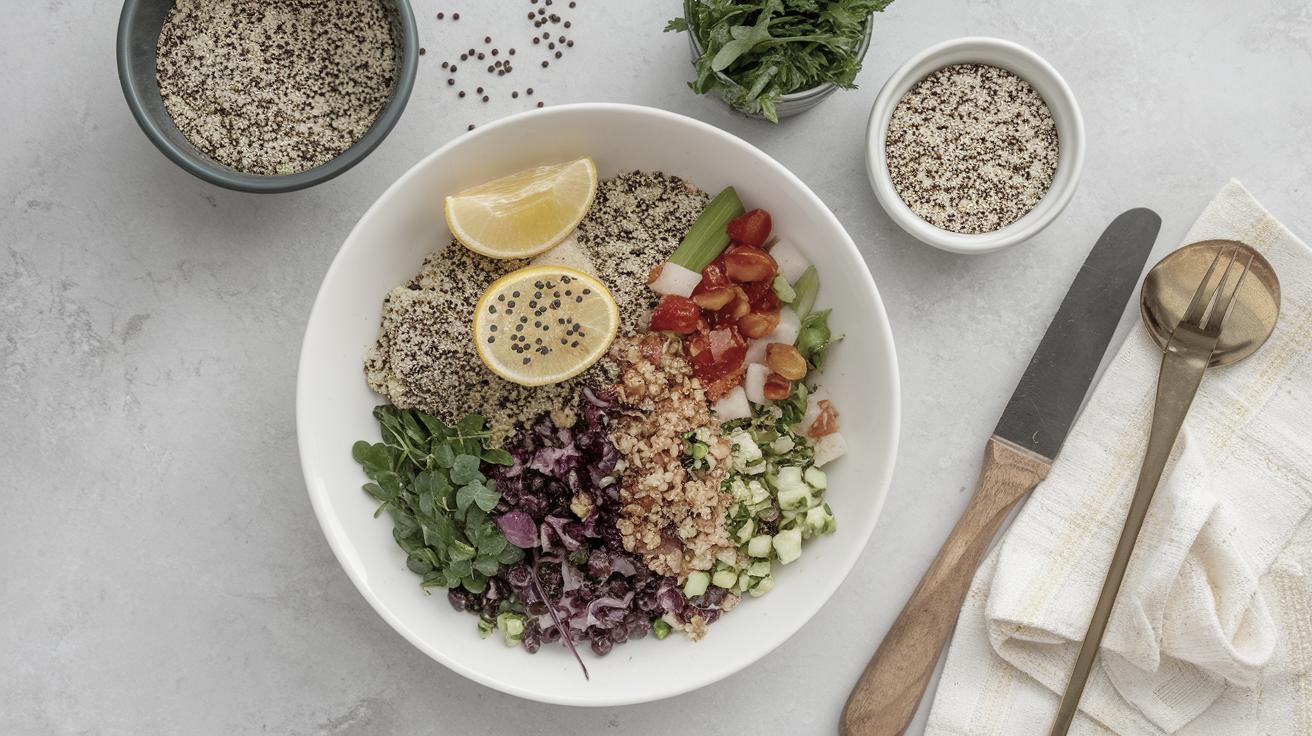
How to Prepare Balanced Quinoa-Based Dishes
Quinoa, a versatile and nutrient-packed grain, has risen to prominence for its health benefits and culinary flexibility. This blog post delves into everything you need to know about incorporating quinoa into your meals. From understanding what quinoa is, to cooking it perfectly, to exploring a variety of delicious recipes, we’ve got you covered. You’ll also discover other whole grains worth trying to diversify your diet and add even more nutritional value to your meals. Let’s embark on this journey to creating delicious, balanced quinoa-based dishes!
What is Quinoa?
Quinoa is a seed that hails from the Andean region of South America, primarily cultivated in countries like Peru and Bolivia. Despite its grain-like texture, quinoa is technically a pseudo-cereal. Praised for its nutty flavor and fluffy texture, it has become a staple in health-conscious households around the globe.
The true appeal of quinoa lies in its nutritional profile. It is a complete protein, meaning it contains all nine essential amino acids, making it an ideal ingredient for plant-based diets. Additionally, quinoa is rich in dietary fiber, vitamins, and minerals, providing a hearty and healthy foundation for countless dishes.
How to Cook Quinoa
Equipment
To properly cook quinoa, you’ll need a few basic kitchen tools. A fine-mesh strainer is essential for rinsing away quinoa’s natural coating, saponin, which can be bitter if not removed. Additionally, you’ll require a medium-sized pot with a lid for cooking and a fork for fluffing.
Though a fine-mesh strainer and a medium pot are the primary tools, having other optional equipment, such as a rice cooker or an Instant Pot, could simplify the process. These kitchen gadgets can also offer alternative cooking methods that might suit your preferences or time constraints.
Ingredients
The beauty of cooking quinoa lies in its simplicity. You’ll need just a couple of ingredients: quinoa and water. A typical ratio is 1 cup of quinoa to 2 cups of water, but you can adjust this depending on how fluffy or sticky you prefer your grains.
For added flavor, consider substituting the water with vegetable or chicken broth. A pinch of salt can enhance the taste, and incorporating spices or herbs like garlic powder or thyme while cooking can introduce delightful variations in flavor.
Instructions
Begin by rinsing the quinoa thoroughly under cold water using a fine-mesh strainer. This step is crucial to remove the saponin, an outer coating that tastes bitter, thus ensuring a more palatable dish.
Add the rinsed quinoa and water to your pot and bring it to a boil. Once boiling, reduce the heat to low, cover, and let it simmer for about 15 minutes or until the water is absorbed. Remove from heat, let it sit covered for 5 more minutes, then fluff it with a fork. Your perfectly cooked quinoa is now ready to be a part of a delicious meal!
17 Favorite Quinoa Recipes
Quinoa’s adaptability makes it a wonderful ingredient for a wide array of recipes, from breakfast bowls to savory dinners. One can start their day with a hearty quinoa breakfast bowl, combining cooked quinoa with almond milk, berries, and nuts for a filling, nutritious start.
For lunch or dinner, you can explore the flavors of a quinoa salad with roasted vegetables or a quinoa-stuffed bell pepper. These dishes not only highlight quinoa’s ability to absorb flavors but also demonstrate its compatibility with various cuisine styles.
Other standout recipes include a Mediterranean quinoa salad featuring feta and olives, or a spicy quinoa and black bean chili, showcasing how quinoa can replace or complement meat-based ingredients, offering a lighter and healthier alternative without sacrificing taste.
More Whole Grains to Try
While quinoa is an outstanding option, incorporating a variety of whole grains can enhance your diet’s nutritional diversity. Consider trying farro, a hearty, chewy grain that pairs well with vegetables and proteins. Its nutty flavor can add depth and texture to soups and salads.
Barley, known for its rich fiber content, is another excellent alternative. It works beautifully in stews and casseroles, providing a comforting and satisfying component to any meal. Similarly, ancient grains like spelt and kamut are gaining popularity for their unique flavors and textures.
Integrating these grains into your meals not only keeps your culinary experiences exciting but also contributes positively to your overall health. From boosting fiber intake to enriching your meals with essential vitamins, whole grains are truly worth the effort to explore and enjoy.
Final Thoughts
| Section | Key Points |
|---|---|
| What is Quinoa? | Quinoa is a pseudo-cereal rich in nutrients, originating from South America. It’s a complete protein, ideal for plant-based diets. |
| How to Cook Quinoa | Use a 1:2 ratio of quinoa to water; rinse thoroughly to remove bitterness; cook for 15-20 minutes until water is absorbed. |
| 17 Favorite Quinoa Recipes | Quinoa is versatile, complementing dishes like breakfast bowls, salads, stuffed peppers, and more. |
| More Whole Grains to Try | Explore grains like farro, barley, spelt, and kamut for varied flavors and nutritional benefits. |

